

Key Takeaways:
- Bluetooth Classic and BLE share the same name but serve different purposes. Classic is used for continuous, high-speed data like audio streaming. BLE is built for small, occasional data bursts.
- BLE is the clear winner when battery life is a priority. It can power devices for months or years, and it's ideal choice for wearables, health monitors, and smart home gadgets.
- For audio streaming, Bluetooth Classic is still the better choice. It delivers higher data rates and a steady, uninterrupted connection.
- BLE supports more flexible network setups, including mesh configurations, which makes it a natural fit for IoT and large-scale connected environments.
- The two technologies aren't directly compatible, which is why dual-mode devices exist. They handle both, switching between modes based on what's needed.
- The right choice between Bluetooth Classic and BLE comes down to what your device actually needs to do, not which technology sounds better.
Today, Bluetooth technology is one of the most important innovations, that connects multiple devices. However, with the introduction of Bluetooth Low Energy (BLE), businesses often wonder which technology best suits their needs. Both fall under the Bluetooth umbrella, but they have distinct purposes.
In this article, we'll clarify the difference between Bluetooth and Bluetooth Low Energy. It'll examine the improvements made in Bluetooth 4.0 and Bluetooth 5.0, explore their features, and discuss their use cases. When you understand the strengths and limitations of each, you can make informed decisions about which technology aligns with your specific requirements – whether it's BLE integration or custom kiosk software development – and when to partner with a BLE app development company for your project.
Let’s go! 🚀
📚 The Concept of Bluetooth Classic
Bluetooth Classic, officially known as Bluetooth Basic Rate/Enhanced Data Rate (BR/EDR), is a well-established wireless technology designed to handle continuous, streaming data over short distances using short-wavelength radio waves. It excels in scenarios where high throughput and sustained connections are necessary.
Key features of Bluetooth Classic include:
- Higher Data Rates. It operates in the 2.4 GHz ISM band and supports data rates of up to 3 Mbps, making it suitable for applications requiring robust data exchange, such as audio transmission and file sharing.
- Voice and Audio Support. This technology is optimized for transmitting audio data, making it ideal for wireless headphones, speakers, and hands-free devices.
- Support for a Wide Range of Devices. Bluetooth Classic is supported by a vast array of devices, such as keyboards, mice, game controllers, and other input devices ensuring compatibility and ease of use across different platforms.
The Advantages and Limitations of Bluetooth Classic
Like any other technology, Bluetooth Classic has its advantages and disadvantages. Let’s take a closer look at them.
Bluetooth Classic remains a cornerstone in wireless communication, particularly in applications requiring continuous data transmission and robust audio support. However, Bluetooth's higher power consumption and limited range present challenges, particularly in modern IoT applications. In contrast, BLE often becomes a more suitable choice, like in IoT in healthcare from clinics to mobile apps.
📘 The Concept of Bluetooth Low Energy
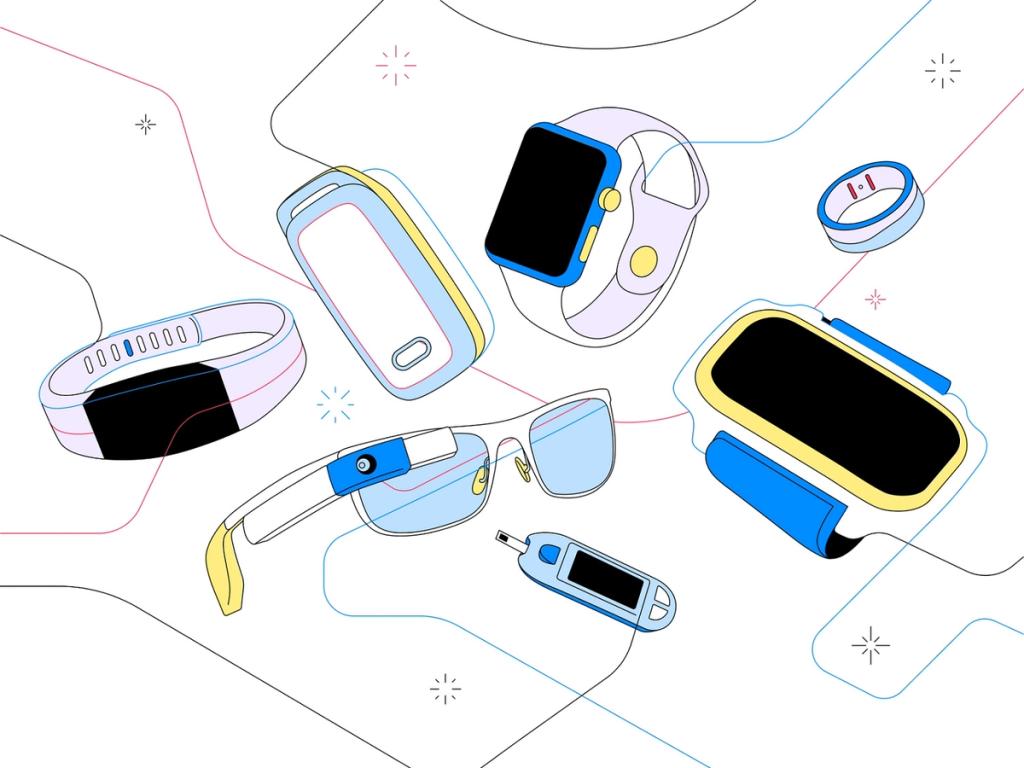
BLE, introduced as part of the Bluetooth 4.0 specification in 2010, is a wireless communication technology that provides reduced power consumption and cost, which can significantly influence IoT project cost estimation, while maintaining a similar communication range to Bluetooth Classic. This innovation caters specifically to the growing demands of modern applications, especially in the realms of wearable devices, smart homes, and the IoT.
BLE operates in the same 2.4 GHz ISM band as Bluetooth Classic but employs a different modulation scheme, allowing for low energy consumption, which is particularly beneficial in IoT for factories where energy efficiency and cost reduction are critical. This technology is optimized for the periodic transfer of small amounts of data, making it ideal for devices that require long battery life and intermittent communication.
Our developers working on BLE connection in Android consider connection states, advertisement intervals, and reconnection strategies to optimize power efficiency and maintain a reliable connection.
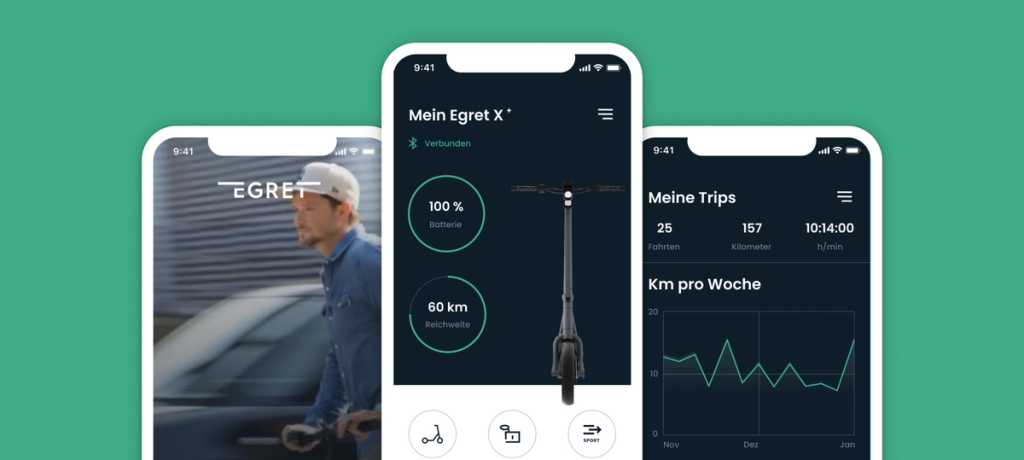
BLE technology helps us connect e-scooters to the Egret mobile app for threir control and monitoring (image by Stormotion)
Key features of Bluetooth Low Energy include:
- Low Power Consumption. BLE vs Bluetooth consumes significantly less power, enabling devices to run on small batteries for months or even years. This efficiency is achieved through short, efficient communication bursts and long sleep periods.
- Efficient Data Transfer. It is suitable for transmitting small amounts of data periodically, which is common in sensor and beacon applications.
- Scalability and Flexibility. BLE supports a wide range of stateful applications, from simple data broadcasting to complex mesh networks. Additionally, the Bluetooth 5.2 update introduced LE Audio, which enables the transmission of audio over Bluetooth Low Energy vs Bluetooth Classic. This update provides new features like multi-stream audio and broadcast audio, paving the way for more advanced and versatile audio applications.
- Fast Connection and Communication. BLE offers rapid connection establishment and data transfer, enhancing user experience in various applications.
- Robust Security. BLE includes advanced security features such as AES-128 encryption and secure connections, ensuring data integrity and privacy.
The Advantages and Limitations of BLE
BLE technology offers various advantages and certain limitations that are crucial to understanding its effective utilization in modern applications. Let’s examine them.
BLE stands out as a pivotal technology in wireless communication, particularly for those looking to create wearable device apps where power efficiency and long battery life are paramount. If you’d like to learn more about BLE from the perspective of our CTO, Oleksii Bulavka, you can read his recent Bluetooth Low Energy guide.
⚖️ Technical Comparison of Bluetooth Classic and BLE
As you see, Bluetooth and BLE are multifaceted technologies. Let’s make a comparison Bluetooth and Bluetooth Low Energy tech protocols to understand their differences with the help of our React Native Developer, Dmytro Zasukha.
When comparing BLE and Bluetooth, it’s also important to consider how the Web Bluetooth API can enhance device connectivity. To sum up the following table, the lower latency, more versatile network topologies, and enhanced security of Low Energy Bluetooth compare to Classic which provides higher data rates. Still, both technologies have found their places in various domains, where developers leverage their strengths for efficient and effective wireless communication solutions.
Exploring ANT vs Bluetooth further reveals how ANT excels in ultra-low-power use cases, while Bluetooth offers broader compatibility.
🗂️ Use Cases of Bluetooth Classic and BLE
With its versatile applications, Bluetooth technology is an integral part of our connected world. The 2025 Bluetooth Market Update report by SIG (Special Interest Group) provides us with the following numbers on BLE and Bluetooth smart devices:
- 1.2 billion Bluetooth audio streaming devices are expected to ship in 2026.
- 700 million Bluetooth wearables will ship in 2026.
- 40 million Bluetooth health and fitness trackers will ship in 2026.
- 690 million Bluetooth smart home devices will be shipped in 2026.
- 110 million Bluetooth asset tracking devices will ship in 2026.
Indeed, BLE vs. traditional Bluetooth has distinct characteristics that make them suitable for a range of use cases, from wearables to farming IoT devices. Let’s discover the most popular applications of each technology.
Up to this day, Bluetooth and BLE aren’t mutually compatible. Therefore, the Bluetooth 4 update introduced Bluetooth dual-mode devices to bridge the Bluetooth vs BLE gap. They support both technologies, providing the best of both worlds.

When you look at dual-mode Bluetooth versus the Bluetooth Classic, you see that dual-mode works better. It connects more easily to different gadgets like iPhones and Android phones, and anything that needs to send a lot of information back and forth. So, if you need a strong link to many different devices, dual-mode Bluetooth is your best choice.
Dmytro Zasukha, Android | React Native Developer @ Stormotion
With dual-mode support, devices can switch between BR/EDR for high-speed data transfer (e.g., audio streaming) and BLE for low-power applications (e.g., sensors, wearable devices). This flexibility optimizes power consumption while maintaining connectivity.
Here are some use cases of dual-mode Bluetooth with examples:
- Smartphones and Tablets. They support both Bluetooth Classic for high-quality audio streaming to headphones or speakers and BLE for energy-efficient communication with fitness trackers or smartwatches.
- Home Automation. Smart locks utilize Bluetooth Classic for secure, close-range unlocking and BLE for remote monitoring and battery status checks via a mobile app.
- Automotive Application. A car infotainment services support Bluetooth Classic for hands-free calling and streaming audio from smartphones, and BLE for transmitting vehicle diagnostic information to a mobile app, illustrating key approaches to connected car app development.
- Gaming and VR. VR headsets and gaming controllers employ Bluetooth Classic for responsive gameplay and BLE for power-efficient communication with companion apps or secondary devices.
To sum up, Bluetooth Low Energy vs Bluetooth has unique protocol features that cater to specific use cases. Dual-mode devices offer a flexible solution that bridges the gap between these two technologies.
🔎 Our Expertise in BLE Integration
Stormotion team has a long track record of cases with BLE integration in various spheres, such as EV companion applications, fitness apps, and e-mobility apps. Let’s see how our team has helped the clients to reach their goals.
One of the most recent examples is Egret, a leading German e-scooter manufacturer, which faced inconsistent Bluetooth connectivity across different scooter models. The IoT application development process involved reverse engineering the existing protocol and creating a generic protocol handler to ensure BLE connectivity with all scooter models. Now, users can set up and control their e-scooters via a user-friendly app.
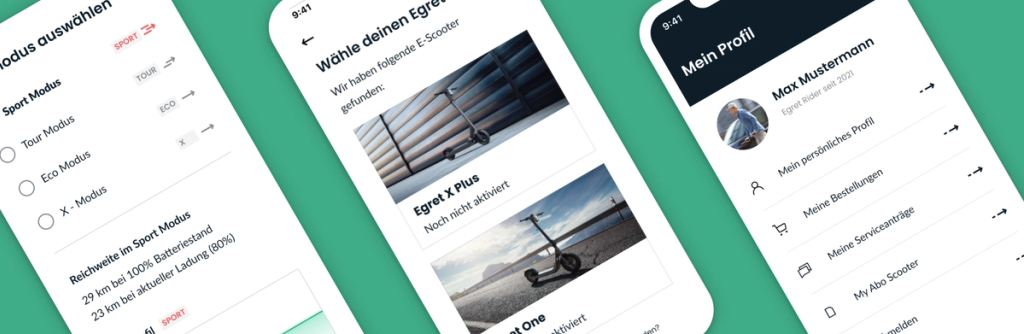
The user-friendly design of Egret allows users to connect and monitor their e-scooters via BLE modules (image by Stormotion)
If you’re thinking about integrating BLE in your React Native app, we can tell you about our case with the EV companion application. We created the Norsk Guardian app for a company producing lithium-ion batteries for boating activities.
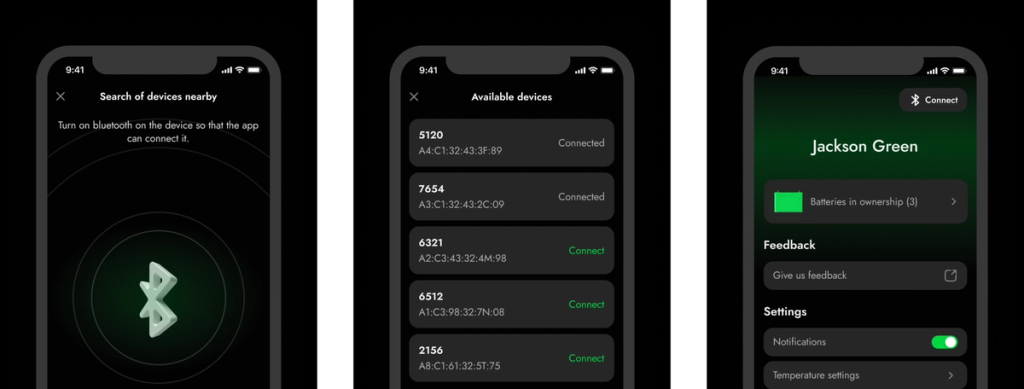
The development process involved thorough testing, BLE module creation for data transfer, and leveraging the React Native framework for app development (which can also be applied when you want to develop a BMS software for real-time monitoring of battery systems). As a result, the app monitors multiple battery parameters such as temperature, voltage, and charge levels via unique BLE modules, ensuring safe water trips.
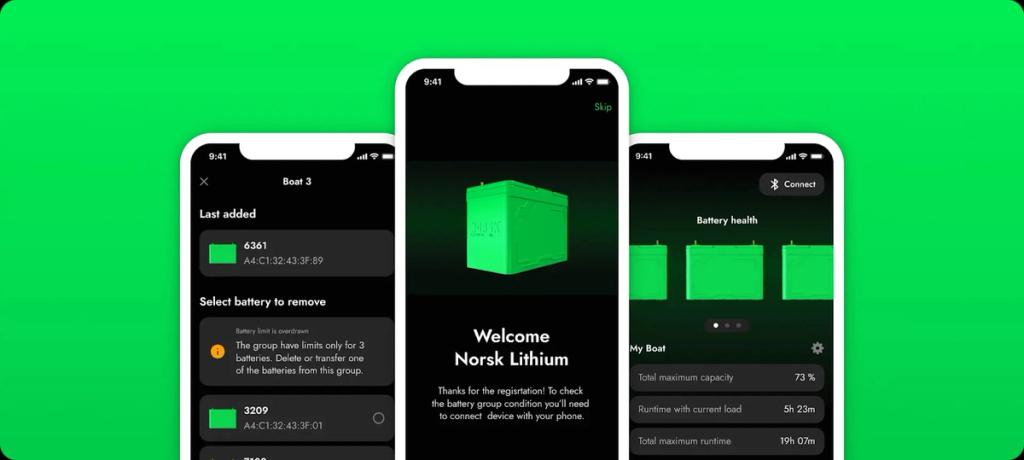
The Norsk Guardian app monitors crucial battery parameters for safe boating with lithium-ion batteries (image by Stormotion)
This video testimonial shows the client’s perspective on our work with Norsk Guardian:
The other notable example is SportPlus. Our task was to develop a mobile app that seamlessly connects with workout equipment. The main challenge was determining how to integrate BLE fitness devices into app and manage the inconsistent communication protocols across four different BLE standards. To address this, the team created a generic protocol handler. Now, the app facilitates smarter, data-driven workouts, helping SportPlus leverage modern technology in the fitness industry.
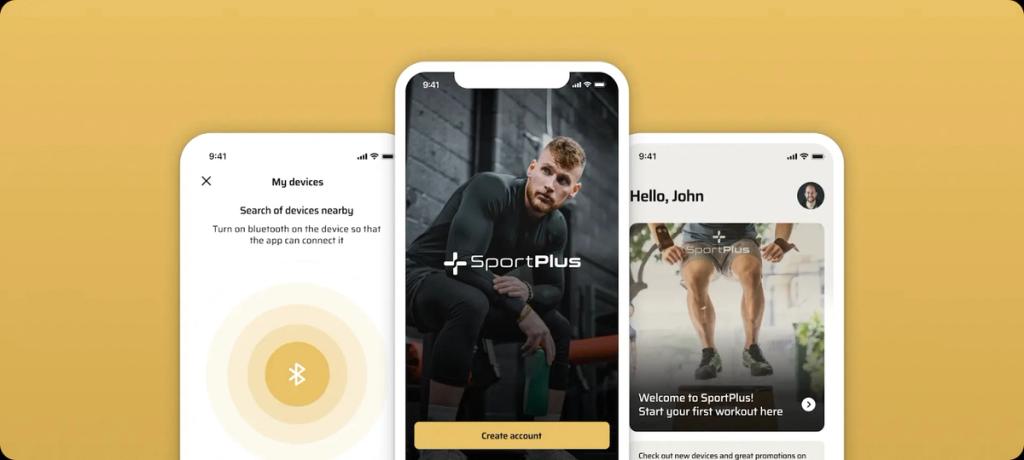
SportPlus enhances fitness routines overcoming the challenge of integrating multiple BLE fitness devices into the app (image by Stormotion)
If you have questions about implementing Bluetooth or BLE into your project, write to us!