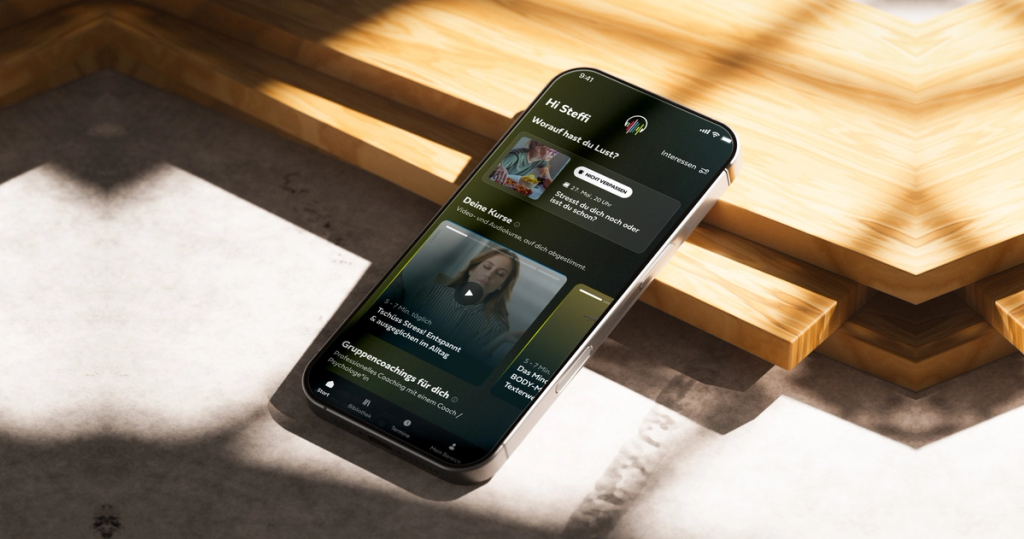
Mental Health App Development Services
We build mental health apps that users trust during their most difficult moments – corporate wellness tools with 1,000+ interactive courses, meditation platforms, and online therapy systems.
Contact us
Why Choose Our Mental Health App Development Company?
-
500K+ users
across the wellness platforms we built. Your mental health app will be built by a team that understands what's at stake.
-
250+ partner clinics
rely on the white-label app we developed. Healthcare professionals trust our work with their patients' care.
-
1,400+ companies
trust Mindance, the corporate wellbeing platform we’ve built. Enterprise clients depend on our platform for employee mental health every day.
Mental Health App Development Solutions We Provide
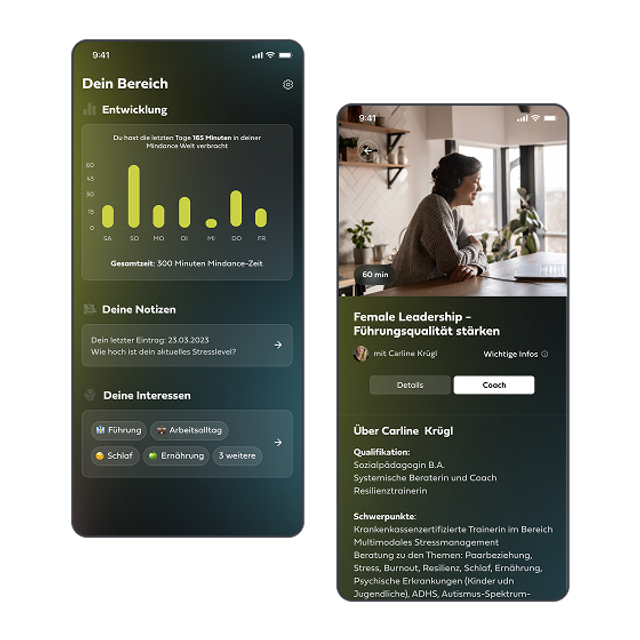
Mindance (image by Stormotion)
Corporate Wellness Apps
We create B2B2C wellness apps, where companies pay to access mental health resources for their employees. These applications have libraries of content, live coaching, group sessions, and HR dashboard analytics.
On-demand mental health content (meditation, stress management)
Face-to-face coaching, team sessions, and chat-based assistance
Anonymous usage analytics
Online wellness events
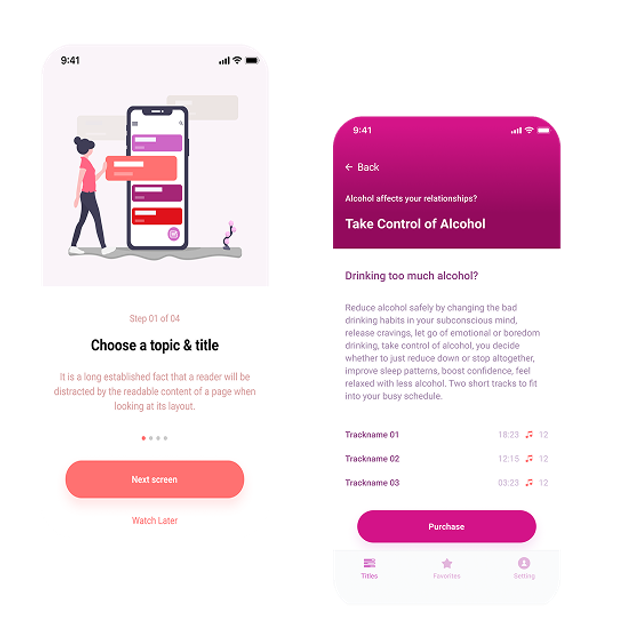
Feel Amazing (design by Stormotion)
Rehabilitation & Aftercare Platforms
We create applications to assist patients who are in the recovery from mental health crises, substance use, or other life events. These platforms can include care plans, therapist communication, and progress tracking.
Individual plans of recovery with daily tasks and milestones
Chat and video care team assistance
Patient and physician progress dashboards
Recidivism prevention techniques
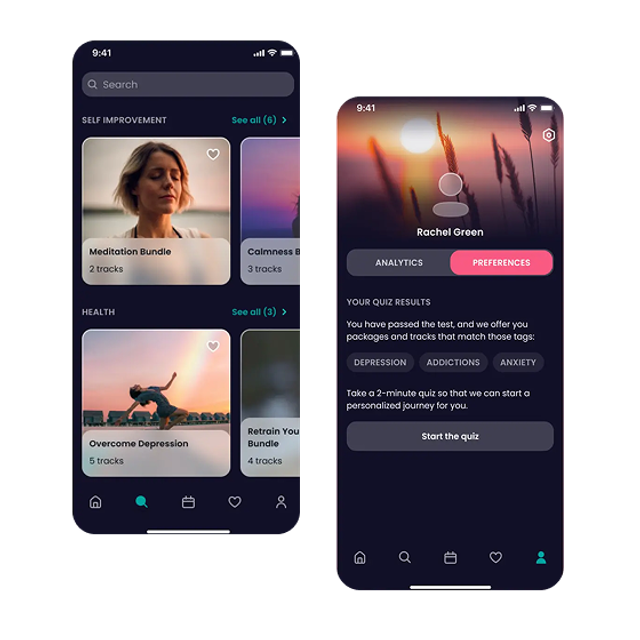
design by Stormotion
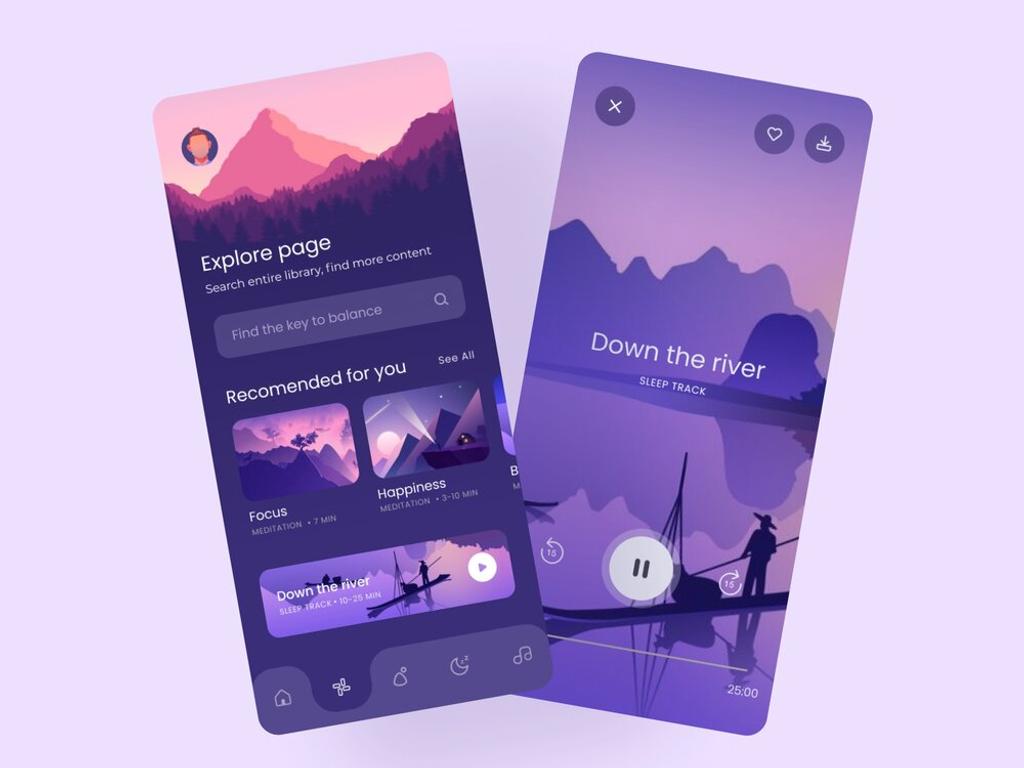
Meditation & Mindfulness Apps
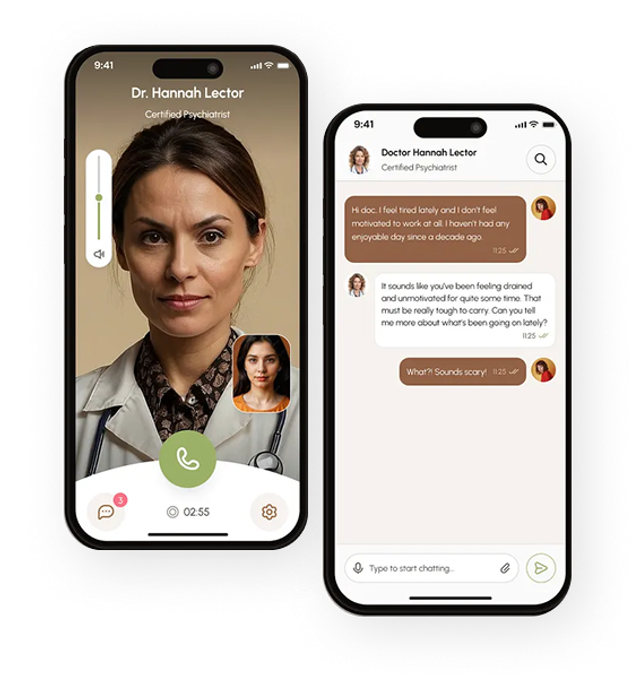
As a part of our mental health app development solutions, we create guided meditation and mindfulness apps. They can include audio lessons, breathing, and tracking progress for a daily practice.
Libraries of audio and video content
Personalized meditation sessions with progress tracking
Breathing exercises and mindfulness techniques
Habit streaks and gamification
design by @strangehelix
Digital Therapy and Counseling Solutions
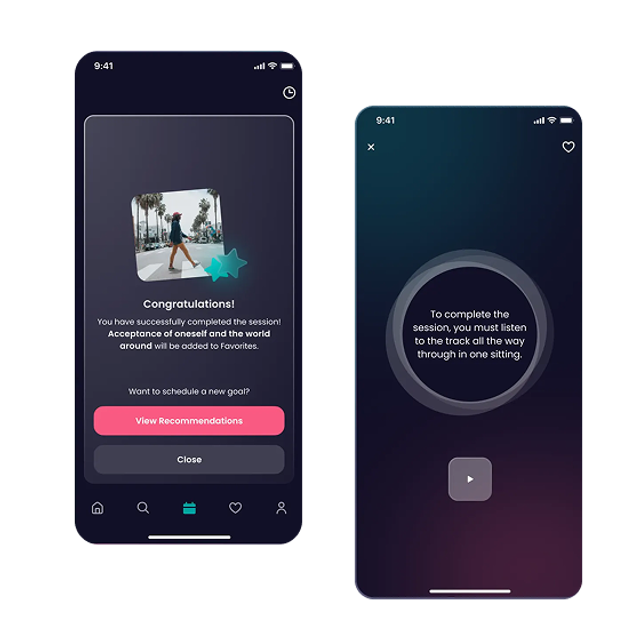
Our platforms connect users and licensed therapists by audio, video, or messaging. Such apps usually come with a scheduling system, safe patient-therapist interaction, progress management, and payment systems.
End-to-end-encrypted video and chat-based therapy
Scheduling of appointments, calendar integrations, and reminders
Mood tracking and journaling
Admin panels with notes and case management
design by Stormotion
CBT & Therapy Workbook Apps
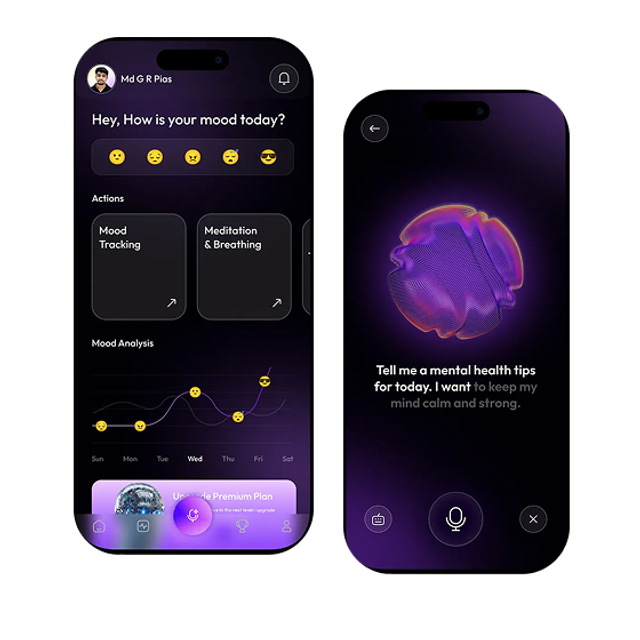
We create applications dedicated to cognitive behavioral therapy aids – interactive handouts, reframing thinking activities, and guided programs.
CBT interactive exercises and thought reframing tools
CBT mood tracking
Visualization of progress over time
Guided exercises assigned by therapists
design by @Md G R Pias
Mood Tracking Apps
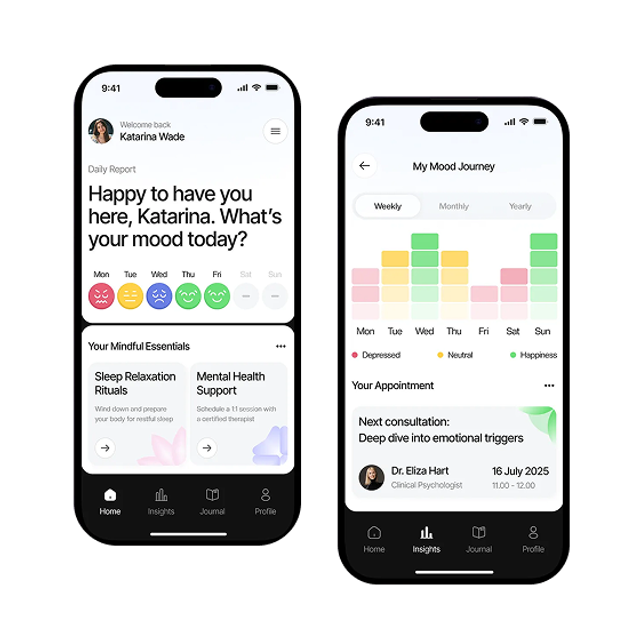
We make apps that assist users in monitoring their mental health over time. It consists of mood records, symptom monitoring, and pattern identification. These platforms are commonly used with therapy or as independent self-management tools.
Daily mood tracking (anxiety, depression, sleep, energy levels)
Weekly and monthly trends and insights
Reminders and notifications
Integration with wearables and health APIs (Apple Health, Google Fit)
design by Lil Dicky
Crisis Support & Peer Support Apps
We build applications that provide instant help during mental health emergencies. The functionality can include peer support groups, hotlines, and AI chatbots.
Peer support forums (anonymous or semi-anonymous)
Crisis hotlines with one-tap calling
Safety plan (emergency contacts and coping techniques)
AI chatbots & online chats with trained volunteers or counselors
Our Recent Mental Health Projects
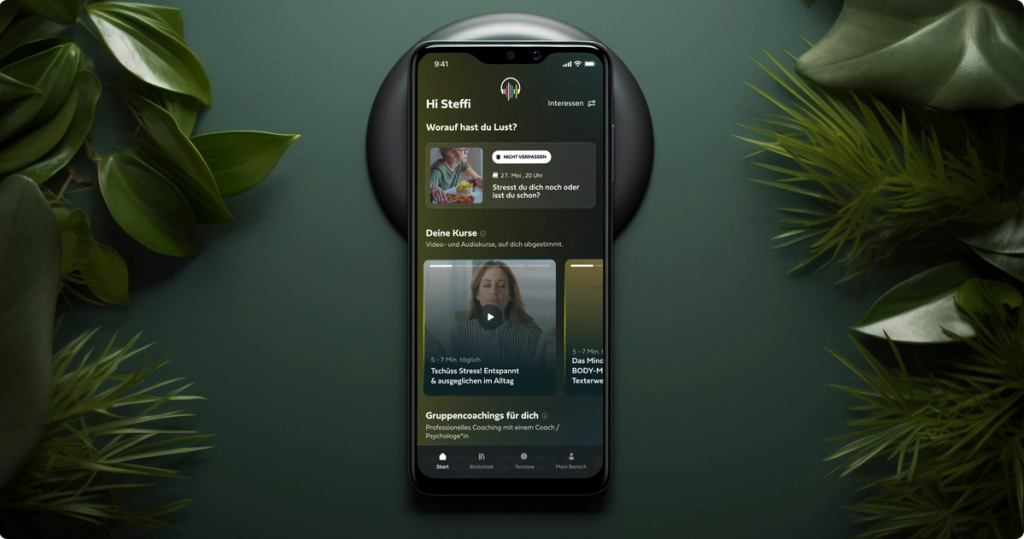
B2B2C wellness app
Mindance provides more than 1000 on-demand classes, weekly yoga and meditation classes, live coaching, and emergency hotlines. Employers can access HR dashboards, corporate newsfeed, and online assessment of employee mental stress.
View case study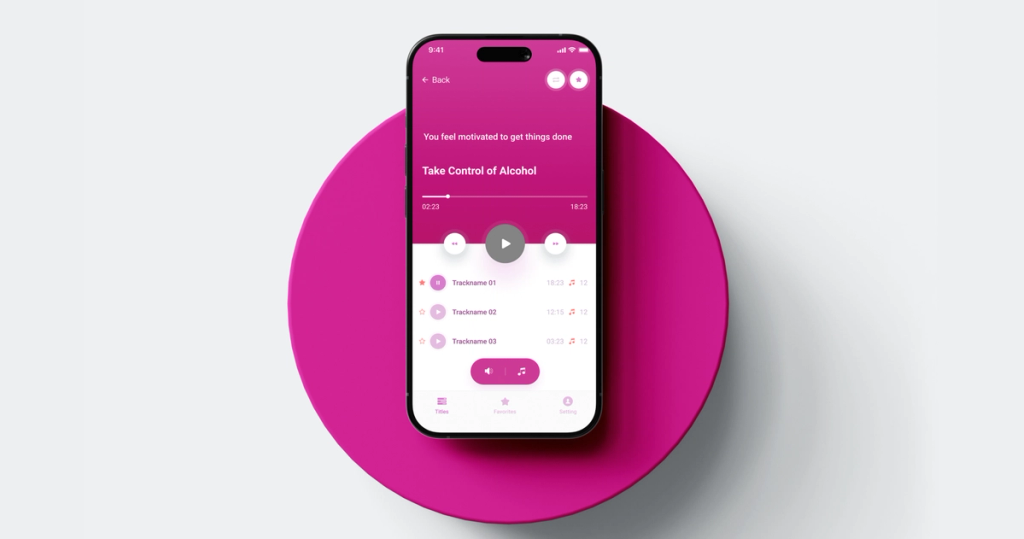
Mental health app
Feel Amazing is a hypnosis application that provides guidance by Ailsa Frank. It has more than 60 records to build confidence, handle addictions, improve relationships, and decrease stress.
View case study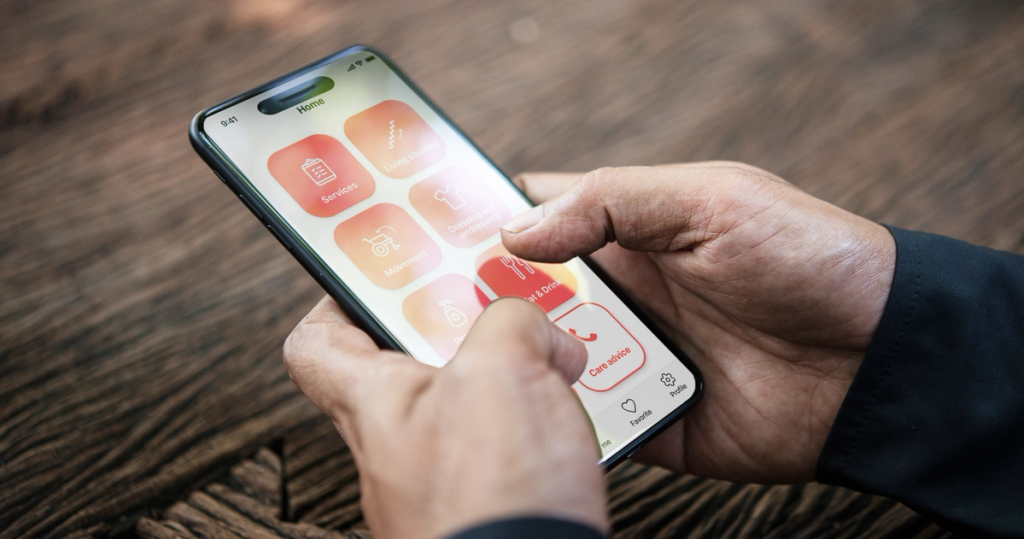
App for caregivers
Lifebonus offers support for caregivers with AI exercise tracking, stress-relief resources, and task management tools. The app enhances the productivity of caregivers by 30% and reduces stress by 25%.
View case study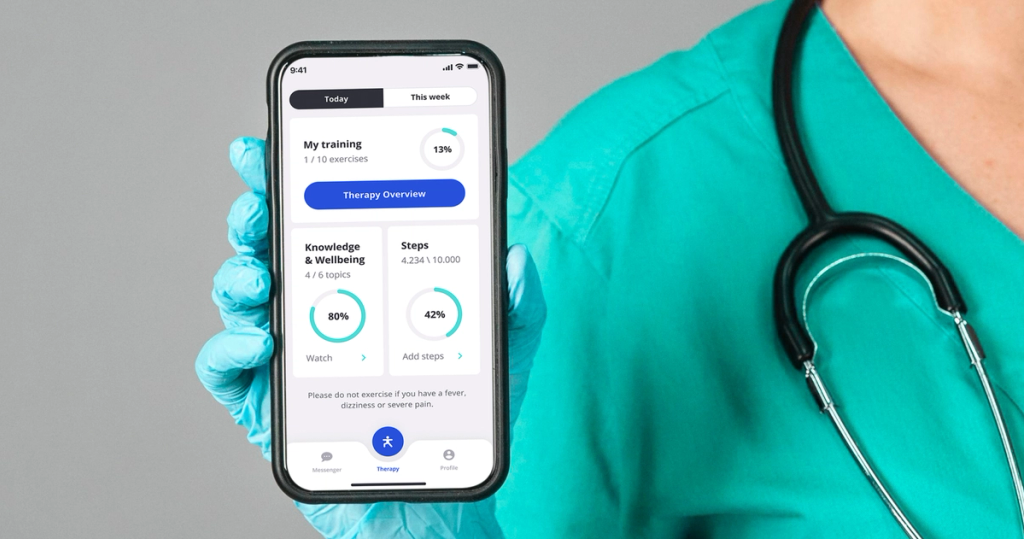
White-label physical rehabilitation app
Caspar Health is a digital rehab application. It provides video-based therapy from 60 therapists and doctors, secure patient-therapist chat (TalkJS), and progress monitoring. The users claim 97 percent of app satisfaction.
View case studyTechnologies We Use for Custom Mental Health App Development
Programming Languages
Frameworks
Networking & APIs
Backend & Data
Payments & Monetization
External Devices / IoT & Connectivity
Graphics, Video & Audio
Forms & Validation
Analytics & Monitoring
Testing & QA
CI/CD & Delivery
AI / Machine Learning
Admin & CMS

TypeScript

Kotlin

Swift








Testimonials


"If you're thinking of going to Stormotion, you're going to have a very easy team to talk to, to communicate with, to understand what you want to do. They will tell you if you're barking up the wrong tree and are going to waste your time and money. I'd say "give it a go!" and I thoroughly recommend Stormotion."


"Stormotion stood out because of their focus on Bluetooth-connected products. They weren't just app developers, they understood the unique challenges of building mobile app experience for hardware products. Their collaborative approach, technical expertise, and ability to quickly grasp the vision of the North Guardian app made it clear that they were the right fit."


"Stormotion has really delivered on their promises. They’ve been very transparent about their progress, flexible in reacting to changes, and solution-focused in overcoming challenges. If they didn’t know something, they would find out, which gave us great confidence in their ability to go the extra mile."


"We originally got in touch with Stormotion from our original app developer. And very soon we found real value in choosing Stormotion, because they previously had real valuable experience on the field – digital apps working in the realm of EV charging. So, it was really a no-brainer for us to to go with them."


"The Stormotion team quickly became our team for everything Native app-related. It would be hard to name all the things that we built over the many years we worked together, but overall, I think we had a good partner who was able to adapt the way we worked, and the way they worked. So that we could ultimately build a product that had the quality that we wanted and with the speed that we wanted."


"Given a tough budget and a lack of knowledge in our own engineering team, we quickly came to Stormotion. We had already worked together on previous projects, and I knew that, based on React Native, we could have one engineer responsible for it. That was just amazing because I could really focus on our customer side, knowing that the mobile application for the testers was in very good hands."


"Trust Stormotion. Work with them on your road map, on your technical debt. Also, expect feedback because the team is eager to do this. It's what I value and, I think, many startups value."


"I highly recommend Stormotion as a service provider for app development. They're young, flexible, dynamic, creative and very fast. The cost of planning and implementation is also reasonable. As they use "pay as you go", have a good plan first – then the result also will be satisfactory."


"Working with Stormotion was a blast! The Project Managers, and especially Alex, are always there for you when you need them to go the extra mile. And it's very easy to communicate with them. Whether it's something urgent or whether it's a bigger task, like building the structure of the architecture, I always felt like I was treated very well. Stormotion delivered a great app experience from day one."
Stormotion’s Development Principles
1
Deliver solutions, not code.
Your value isn't in lines of code but in problems solved. Don't just execute requirements – understand the business challenge, question assumptions, and deliver outcomes that actually matter.
2
Your best effort means nothing if it doesn't work.
You can work late nights and write your best code ever, but if it breaks in production, nobody will see that effort – they'll only see the failure. Test your work before you ship it. Your hard work deserves to actually work.
3
Slow is smooth. Smooth is fast.
Prioritize clean code, solid architecture and thoughtful decisions. True speed comes only after deep understanding.
4
Done is better than perfect. But some done is just version one.
Chasing perfection can waste time. It's okay to move on when something is good enough. But if we start building on top of weak work, it's worth going back and doing it right.
5
Duplicate. Abstract. Refine.
Code duplication is awful, but it is far cheaper than the wrong abstraction (Sandi Metz). The complexity of the abstraction has to reflect the complexity of the problem it solves.
6
Everyone teaches, everyone learns.
Sharing knowledge sharpens your own understanding. Every code review, technical discussion, or disagreement is a chance for mutual growth. Stay curious about different approaches – even when they don't match your preference, they often reveal something valuable you hadn't considered.
7
Keep one eye on today, one on tomorrow.
The world moves fast, and what worked yesterday might not work tomorrow. Don't just follow old habits because “that's how we've always done it.” Stay curious about new tools and methods.
How can we help?
Thank you
Your message has been sent.
Our manager will contact you as soon as possible. Have a nice day!
To Home Page
Book a call with our Co-Founder, Roman, to explore your mental health project.
Mental Health App Development Process: Collaboration Models
Pre-Project
Discovery Stage
Planing
Agile Development
UX-Prototyping
Design
Development
QA & Testing
Transition
Maintenance
Handover
Next Iteration
We offer a custom mental health app development process to fit your goals: designing an MVP, building a new product, or scaling an existing app. Instead of a fixed-price contract, you have the speed-to-value process and iterative delivery.
What you get:
- Our team shares the responsibility for project results. We’ll tell you when something doesn’t make sense.
- We question assumptions, offer better solutions, and set measurable objectives.
- We recommend the relevant technologies and integration for your project. You can rely on us selecting health data APIs ot therapy communication systems.
We work with you as long-term partners and offer you our industry experience and technical background.
Our Excellence Pillars: Why Partner with Stormotion
Contact us-
0.3%
React Native candidates are employed. We select only 3 out of 1,000 through our technical recruitment process.
-
3.7 years
average stay of our engineers. We ensure team longevity in your mental health project.
-
81%
code quality score. We don't ship untested code to production.
FAQ: Mental Health Mobile App Development Services
What makes your mental health app development services different?
Since 2017, we’ve developed mental health and wellbeing apps. We’ve already shipped applications to 500,000 plus patients and have collaborated with B2B2C companies with 1,400 plus business clients. Above all, we don’t simply write code, but we do question assumptions, propose a more efficient way to do things, and share code-ownership.
If some advanced features should be released later, we’ll inform you of that. If your notifications are annoying to users, we’ll take a step back. We’re not only a vendor, but we’re also a technical partner.
How long does it take to develop a mental health app?
The development process is based on app scope and complexity. An MVP with core functionality such as user registration, content delivery, and mood tracking usually takes 3-4 months. More complex apps with video therapy, payment systems, AI chatbots, or multi-tenant architecture can be completed in 5-8 months.
We divide projects into sprints and incrementally deliver working features so you can see the progress at the beginning and change priorities along the way.
Which platform should I build my app for – iOS, Android, or both?
React Native is compatible with all types of mental health applications and enables you to run on both Android and iOS with a single codebase. This method reduces the development time by half and maintains lower costs in comparison with the development of separate native apps.
If your audience is iOS-oriented (such as in the U.S. and Europe), then you can begin iOS-only and add an Android app later.
Can you integrate AI and machine learning into mental health apps?
Yes. We’ve worked with OpenAI SDKs, Firebase ML, Google ML Kit, and TensorFlow on chatbots driven by AI, symptom analysis, mood forecasting, and content suggestions. If you’re thinking about integrating AI/ML into your app, we can help you set realistic goals and comply with industry regulations.
For example, in the LifebBonus app, we connected Google ML Kit to monitor exercise movements through the phone camera, which provides real-time feedback to the caregivers.
Do you provide HIPAA-compliant development?
We’re familiar with HIPAA compliance and have worked on projects that required patient-therapist communication, encrypted data storage. If your application requires HIPAA compliance, we can discuss it all together. The workflow can include AWS or Azure HIPAA-compliant services, encrypted databases, and access controls.
But HIPAA-compliant development comes with the added complexity and cost. During the Discovery Phase, we would recommend scoping this to determine whether it’s needed in your case.
How do you handle user data privacy and security?
All our mental health applications are developed in accordance with the GDPR principles of data minimization, user consent, secure storage, and right to deletion. We’re using end-to-end encryption of chat and video functionality, secure authentication (Firebase Auth, OAuth), and an encrypted database (PostgreSQL).
We store sensitive information as therapy notes or clinical assessments, on the device or in a secure cloud store with access controls. We also apply role-based permissions so that therapists, patients, and admins just see what they need to see.
Can you build both the patient-facing app and the therapist/admin dashboard?
Yes. The majority of mental health applications should have at least two user interfaces: end users (patients, employees) and providers (therapists, care coordinators, HR teams). Our mental health mobile app development services usually include the patient mobile app in React Native and the administration application as a web app with React or Next.js, all with the same backend (Node.js, NestJS, GraphQL, PostgreSQL). This makes the development efficient and keeps the two sides on track.
In the case of Mindance, we developed the mobile app for employees and the corporate admin dashboard that the HR departments can use to monitor engagement and plan wellness events.
Can you integrate with Electronic Health Records (EHR) or existing clinical systems?
As a part of our mental health app development services, we offer integrations with health data APIs, white-label therapy backends, and payment platforms. They’re compatible with EHR integrations such as Epic, Cerner, or Allscripts, though FHIR APIs, HL7 standards.
In case you already have an EHR relationship and API access, we can integrate this functionality. Otherwise, we would suggest building an application and later integrating EHR when you are certain of the basic product.
How much does mental health app development cost?
We form a development unit: full-time engineers and part-time PM, QA, and UI/UX designer. The unit costs $10,000-15,000 per month. Most projects last 5-8 months. So, the cost of a mental health app is between $50,000 and $120,000.
Mental health apps don’t work well with fixed-price projects because of changing requirements and user feedback.
Can you help with App Store approval for mental health apps?
Yes. Health apps that are either providing medical advice or therapy have particular guidelines given by Apple and Google. We have already successfully deployed mental health applications in both stores (e.g., Feel Amazing app) and are aware of the submission requirements. It includes disclaimers, transparent privacy policies, age ratings, and content moderation policies.
Do you offer post-launch support and maintenance?
Yes. Bugs are unavoidable after launching since users begin to interact with your app in a way you hadn’t even foreseen during testing. We offer maintenance packages that include tech debt, library updates, and performance checks. We can also prepare a custom plan based on your needs.
The majority of our mental health clients remain with us after launch because the app requires continuous maintenance, new feature rollouts, and accessibility compliance.

Todd Gilligan
Innovation Lead @ Force USA
"I had meetings with 30 different agencies and the team at Stormotion gave me the most confidence to go forward. With them you feel like you've got a kind, knowledgable & conscientious team behind you. So I was 100% sure that they're going to be able to deliver our project!"